
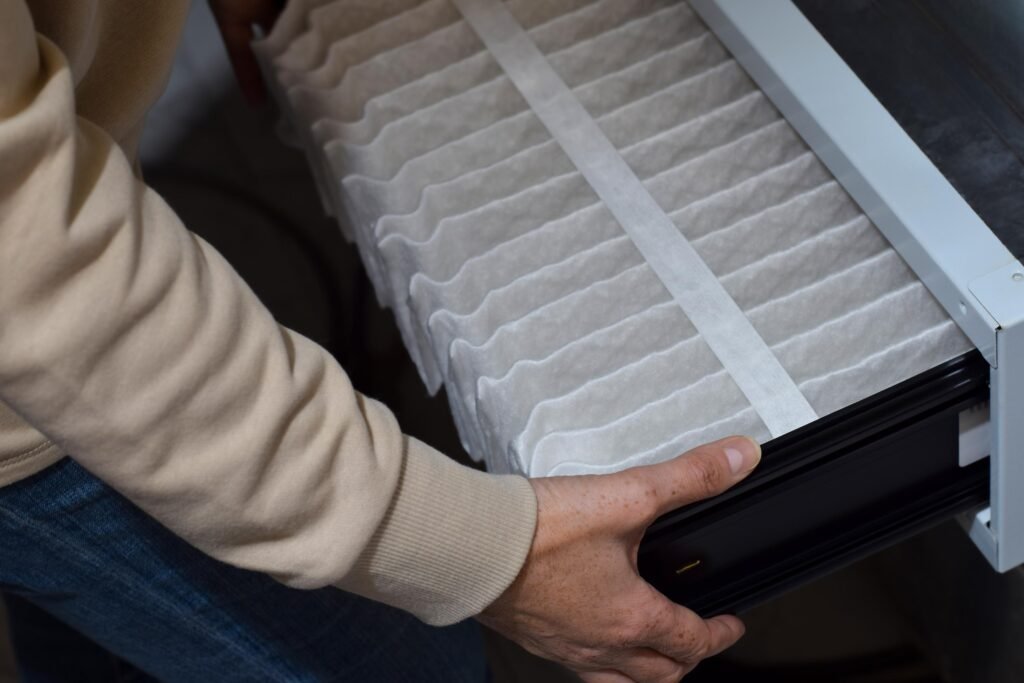
If your furnace is running longer, some rooms feel colder than others, or the airflow at your vents feels weak, there’s a good chance your furnace filter is overdue. A clogged filter can choke airflow and make your system work harder than it needs to.
Before you assume something bigger is wrong, start here: check your furnace filter. Use this guide to figure out the right replacement schedule for your filter type and household.
What is a Furnace Filter (and Why It Matters)?
A furnace air filter sits in your return air path and catches dust, pollen, lint, and other particles before they move through your blower and ductwork. A clean filter helps with:
- Better airflow (your system doesn’t have to “fight” for air)
- More consistent heating
- Less strain on the blower motor and components
- Cleaner indoor air
A dirty filter can restrict airflow, which may lead to longer run times, higher energy use, uneven temperatures, and in some cases overheating and shutdowns.
How often should I change my Furnace Filter?
Furnace filters need to be replaced every 1-3 months for most homes. However, you must check your furnace filter every month. The exact timing depends on filter type, filter thickness, your furnace runtime, and household conditions (pets, allergies, dust).
How to Change a Furnace Filter?
Here’s a step by step guide to change furnace filter:
1) Turn the System Off
Switch your thermostat to “off” so the blower isn’t pulling air while you swap filters.
2) Locate the Filter Slot
Most filters are Inside the furnace cabinet, or in the return air duct near the furnace
3) Match the Size Exactly
The size is printed on the filter frame (example: 16x25x1). Use the same size for the replacement.
4) Install in the Correct Direction
Look for the airflow arrow on the filter frame. The arrow should point toward the furnace/blower
5) Set a Reminder
Write the install date on the filter frame or set a calendar reminder so it doesn’t get forgotten.
Furnace Filter Replacement Schedule by Filter Type
1. 1” Filters (Most Common)
These clog faster because they have less surface area.
- Every 30 days: homes with pets, allergies/asthma, dusty conditions, or heavy furnace use
- Every 60 days: average homes with no special factors
- Up to 90 days: light use, very clean home, no pets (still check monthly)
2. 2”–4” Filters (Thicker Cabinet Filters)
These typically last longer because they hold more debris.
- Every 60–90 days: many average homes
- Up to 6 months: some homes with lighter use (only if monthly checks look clean)
3. Washable/Reusable Filters
They can work, but they must be cleaned properly and fully dried. Rinse/clean every 30 days (or sooner if it looks loaded)
What About MERV Ratings? (Choosing the Right Filter Without Causing Airflow Issues)
Filters come with a MERV rating (how effectively they capture particles). Higher MERV can mean cleaner air, but it can also mean more resistance to airflow—especially with 1” filters.
MERV 8–11 is a common range for many homes. If you go higher, you need to make sure your system can handle it without restricting airflow
If you’re unsure, stick with a quality pleated filter in a reasonable MERV range and focus on changing it consistently.
Signs It’s Time to Change Your Furnace Filter (Even If It Hasn’t Been “That Long”)
Visual Check (Fast and Simple)
Pull the filter and look at it in good light:
- If it looks gray/brown and packed with dust, it’s time.
- If you can’t easily see light through much of the filter media, replace it.
Comfort Clues in Your Home
A clogged filter can show up as:
- Rooms heating unevenly
- Weak airflow from vents
- Furnace running longer than usual
- More dust showing up around the house
System Clues
If you notice short cycling, odd noises, or your furnace shutting down unexpectedly, a dirty filter is one of the first things to check (it’s not always the cause, but it’s an easy win).
The Real-Life Factors That Make You Change Filters More Often
If you have pets
Pet hair and dander clog filters quickly, even if your home looks “clean.”
- One pet: often every 30–60 days
- Multiple pets: often every 30 days
If anyone has allergies or asthma
A cleaner filter helps reduce airborne particles. A clogged one does the opposite.
- Typical schedule: every 30–45 days
If your home gets dusty fast
Dusty areas, rural roads, and nearby construction can shorten filter life.
- Check more frequently if dust is noticeable on furniture or vents
If your furnace runs a lot
Long cold snaps and constant runtime will fill filters faster.
- Heavy winter use often moves you closer to the 30–60 day range
How to Check Your Furnace Filter (Fast Test)
Turn the system off at the thermostat, slide the filter out, and take a look.
- If it’s lightly dusty, it may still have life left.
- If it’s dark, clogged, or matted with debris, it’s time.
- If you hold it up to light and barely see any light through it, replace it.
This takes 30 seconds and can save you from unnecessary service calls.
Which Way Does a Filter Go in a Furnace?
Look for the arrow on the filter frame. That arrow shows the direction of airflow. The arrow should point toward the furnace (toward the blower). So the arrow points in the direction air is moving; toward the furnace.
Quick Tips to Make Filter Changes Easier (and Not Forget Them)
If you always forget, you’re normal. Here’s what actually works:
- Write the install date on the filter with a marker
- Set a recurring calendar reminder (monthly check, replacement every 1–3 months)
- Buy a multi-pack so you’re not scrambling when it’s dirty
- If you run your fan more often, check filters more frequently
You don’t need a perfect schedule. You just need a consistent habit.
FAQs
1. How often should you change a furnace filter in winter?
Winter usually means heavier runtime, so many homes land at every 30–60 days. Check monthly and replace when it looks loaded.
2. Can a dirty furnace filter cause the furnace to stop working?
It can. If airflow is restricted enough, some systems may overheat and shut down to protect themselves. Even when it doesn’t shut down, a dirty filter can reduce performance and comfort.
3. Is a higher MERV filter always better?
Not always. Higher MERV filters catch more particles, but they can also restrict airflow if your system isn’t designed for it (especially with 1-inch filters). If you’re unsure, choose a quality pleated filter and focus on replacing it on time.
4. Can I run my furnace without a filter?
It’s not recommended. Without a filter, dust can coat the blower and internal components, reducing efficiency and increasing wear.
5. Should I set my thermostat fan to “ON” all the time?
A continuous fan can help with air circulation, but it can also load the filter faster. If you run the fan more, plan on more frequent filter checks.
If You Changed the Filter and It Still Feels Wrong
If your filter is new and you still have weak airflow, uneven heat, or the furnace is acting up, don’t keep guessing. It could be something else; like a blower issue, duct restriction, thermostat problem, or a system that needs maintenance.
And if your furnace is older and struggling even with a clean filter, it may be time to talk to a HVAC technician about whether repair makes sense or if furnace replacement should be considered. The key is: don’t make drastic changes based on a hunch.
For homeowners in the Comox Valley, BC, HomeStar HVAC can help you figure out what’s actually going on; whether it’s a simple adjustment, a furnace repair, maintenance, or a bigger system conversation. It’s always better to get expert eyes on it before you spend money in the wrong direction.